
Treatment of refractory patellar tendinopathy with MSV*. Comparative study with LP-PRP (TENDO)
Clinical Trials. gov Identifier: NCT03454737 Num Eudra CT: 2016-001262-28
Objectives
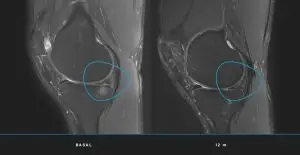
Confirm the presence of patellar tendon GAP regeneration after the peritendinous infusion of MSV and compare it with the group of LP-PRP (Platelet-rich plasma and leukocyte-poor). The research has two objectives. First, to determine if there is clinical improvement after treatment by assessing pain with two procedures, the visual analogue scale (VAS) and the proposed evaluation by the Victorian Institute of Sport Assessment for the patellar tendon (VISA-P), and strength using dynamometry. The second, to determine the presence of patellar tendon regeneration by means of different imaging techniques: ECO, ECO Doppler, Ultrasound Tissue Characterization (UTC) and magnetic resonance imaging with ultrashort echo time (MRI-UTE). With the last two techniques, tissue regeneration can be quantified by visualizing structural defects and quantifying the alignment of collagen fibres that would not be possible with conventional images.Methodology
Phase II, comparative, randomized and double-blind clinical trial. 20 pacientes diagnosed with patellar tendinopathy and signs of rupture in the proximal pole of the patellar tendon showing clinical pain and functional disability over more than 6 months are included. 10 randomized patients are treated with MSV and 10 randomized patients (control group) with P-PRP, intra and peritendinous, by ECO and under sedation. The results will be evaluated at 6 months after treatment. If results support the hypothesis that a greater efficacy is obtained with expanded mesenchymal cells, this autologous treatment will be offered to those patients in the LP-PRP group who still maintain the GAP. All of them will be monitored over 1 and 2 years.