The sole center worldwide to prove scientifically that tendon CAN be regenerated
New tissue is created to make it seem that injury never occured
+0
Doses administered in tendon
0
Clinical trial in patellar tendon
Chronic tendinopathy: non-surgical options and what the evidence shows
Chronic tendinopathy is treated without surgery in most cases, with a supervised progressive loading exercise program as the first step. When there is a structural lesion that does not respond, such as a tendon defect visible on imaging, advanced therapy medicinal products based on cultured mesenchymal cells (CMC) have been studied: in a clinical trial in the patellar tendon they improved tendon structure on imaging more than the control treatment. The choice depends on each case and on medical assessment.
Author: Dr Robert Soler, Medical Director of ITRT. Updated 12 October 2026.
This content is for information only. Its purpose is not to offer a treatment but to explain the available options and what the published scientific evidence shows.
How is chronic tendinopathy treated without surgery?
Exercise therapy is the foundation of treatment. In patellar tendinopathy, a randomized clinical trial in 76 patients compared two programs: progressive tendon-loading exercise achieved a significantly greater improvement on the VISA-P scale at 24 weeks than eccentric exercise, 28 versus 18 points (Breda et al., Br J Sports Med, 2021, PMID 33219115). In chronic Achilles tendinopathy, heavy-load eccentric calf training was described in a study of 15 patients who returned to their previous activity level after 12 weeks (Alfredson et al., Am J Sports Med, 1998, PMID 9617396).
Can a damaged patellar tendon regenerate?
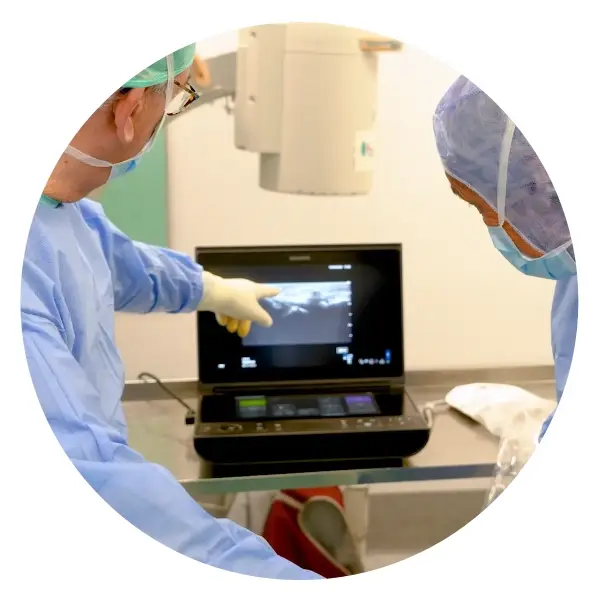
Tendons have a limited capacity for repair, which is why tissue structure is one of the most studied outcomes. In ITRT’s clinical trial in chronic patellar tendinopathy with a defect larger than 3 mm (20 patients, randomized and double-blind), the CMC group showed a significantly greater improvement in tendon structure on ultrasound and MRI at six months than the control group; pain and function improved in both groups with no difference between them (Rodas et al., Am J Sports Med, 2021, PMID 33783227). The improvement was maintained at 12 months (Soler et al., Orthop J Sports Med, 2023, PMID 37711505). An improvement on imaging does not, on its own, mean the tendon is identical to the original, and these results cannot be extrapolated to every patient.
What about Achilles tendon degeneration or rupture?
In chronic Achilles tendon rupture, ITRT has published a series of six patients treated with autologous CMC and followed for at least 24 months: treatment was well tolerated, and improvements in pain and function and structural tendon changes on MRI were observed (Soler-Rich et al., J Orthop Sports Med, 2026, DOI 10.26502/josm.511500254). As there was no control group, these results are preliminary.
What distinguishes a clinic that uses CMC within a regulated framework?
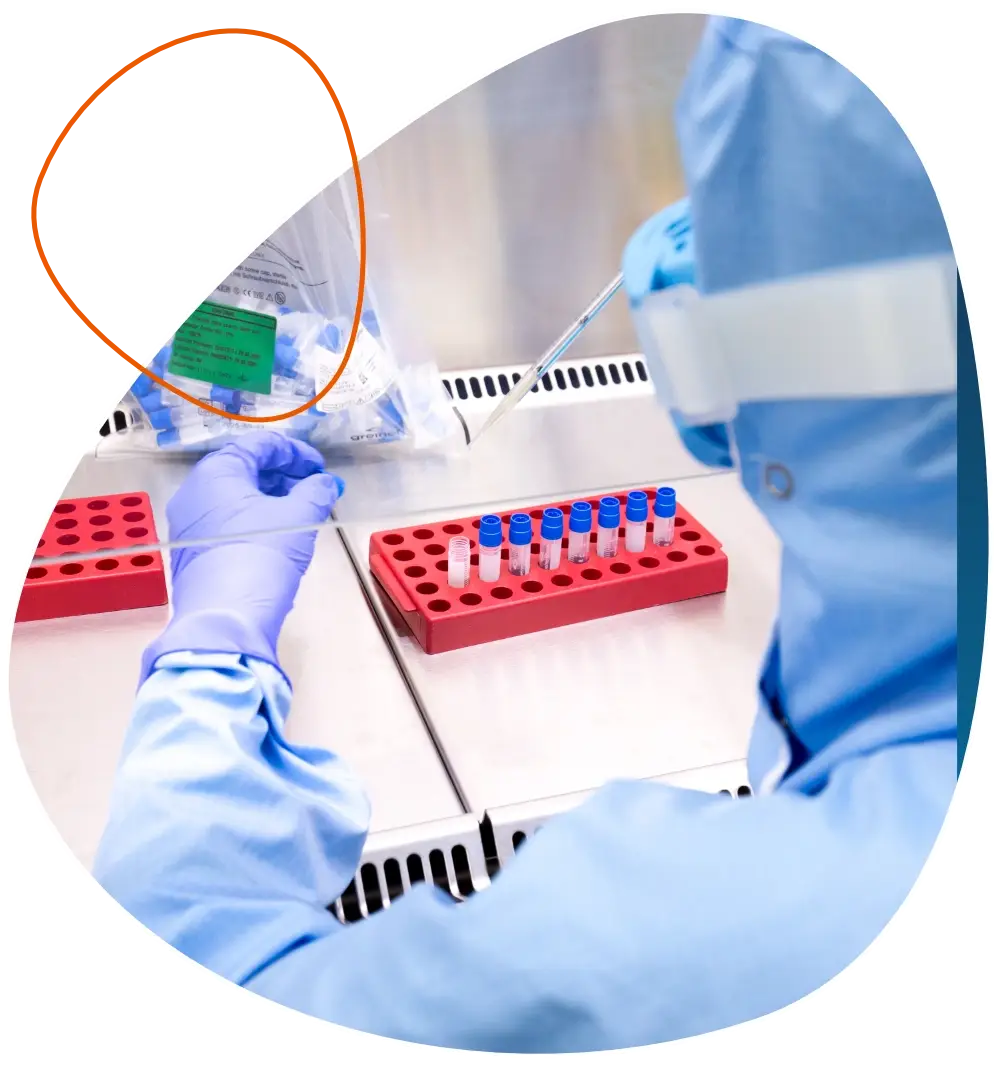
Four things that can be checked: the medicinal product is manufactured in a GMP cleanroom; its administration is authorized by the competent authority (in Spain, the AEMPS), within a clinical trial or through an individual authorization; there are registered trials with published results; and there is regulated clinical follow-up. See also: what makes a tendon and joint clinic regulated in Europe, what CMC are and ITRT scientific publications.
Tendinopathy. Tendon regeneration with Cultured Stem Cells
What is
Tendinopathy?
This disease is caused by inflammation of the tendon resulting from overload when performing repetitive high-demand movements, which can lead to rupture.
It very commonly affects both amateurs and elite professional athletes such as basketball players, tennis, soccer and volleyball players, skiers and regular runners.
Over the past 20 years, we have presented scientific evidence and recently have been the first center to demonstrate clinically that new tendon tissue can be created and that it is possible to recover from injury as if it had never happened.
Causes of a tendon tear
Tendinopathy can be caused by several factors:
Acute trauma: A direct blow or a sudden, violent movement, such as a jump or a fall, can cause a tendon to tear.
Overuse: Repetitive activities and constant overloading can weaken tendons, making them more susceptible to tears.
Aging: As we age, tendons become more fragile and less elastic, increasing the risk of rupture.
Systemic diseases: Conditions such as diabetes or metabolic disorders can weaken tendons and predispose them to injuries.
Not all stem cell treatments are equal; many of them barely contain a handful of stem cells, at best..
Our exclusive therapy of cultivated stem cells is the only one in the field of Regenerative Medicine that has scientifically demonstrated its effectiveness and safety. Only ITRT applies this therapy, which is the result of over 20 years of research.
Solo ITRT aplica esta terapia que es el fruto de más de 20 años de investigación.Differences of our exclusive therapy from the rest of the mislabeled ‘stem cell’ treatment:
Dosage
We have scientifically demonstrated in clinical trial that only by using millions of units can the regeneration process be activated. Our therapy applies millions of stem cells, certified by our laboratory.
Clinical trials
Over more than 20 years, we have developed or taken part in 23 trials, 14 of them authorized clinical trials in patients.
Tipology
There are many types of stem cells, but we have demonstrated that only 3 of them are effective when applied to tissues. In the laboratory, we select the correct types of stem cells to ensure regeneration.
Cellular culturing
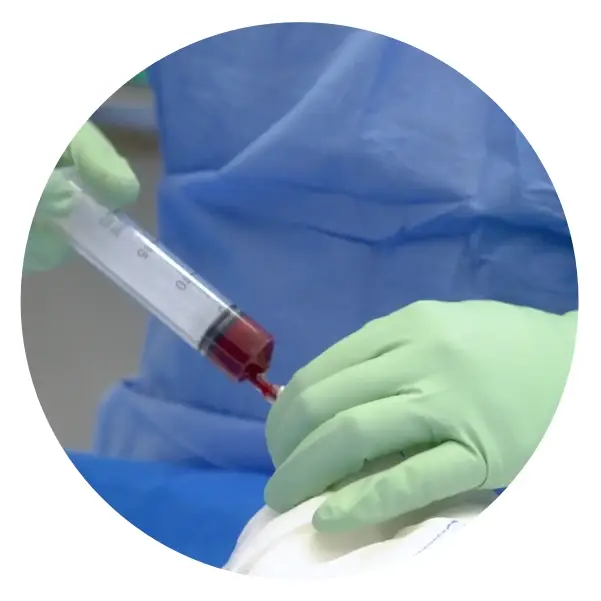
Once the appropriate stem cells are selected, the very small quantity obtained through isolation undergoes an activation and culturing process, causing them to begin multiplying until reaching millions of units.
Cells from donors
We have shown in a clinical trial that we can use cells from other donors. This is very important for elderly patients, those with urgent needs or serious illnesses.
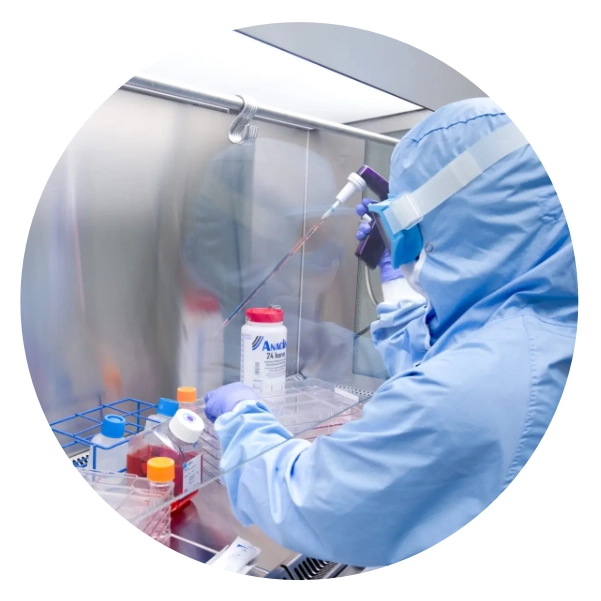
At ITRT we are world pioneers in tendon regeneration, that is, we can create new tissue to make an injury permanently a thing of the past. For the first time ever, we have proven scientifically what we already have seen in our daily clinical experience: that tendons can have a second life.
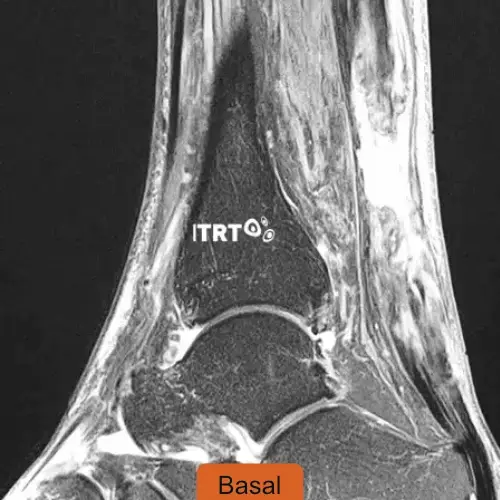
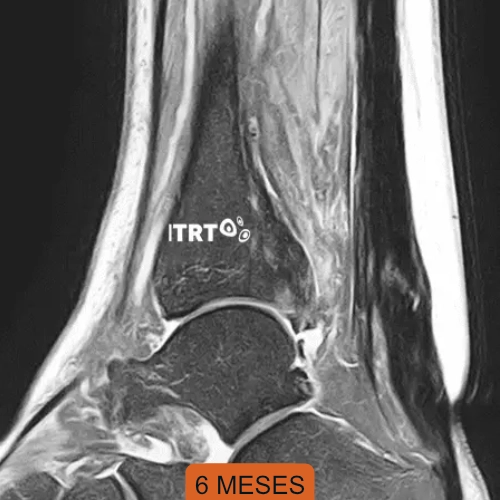
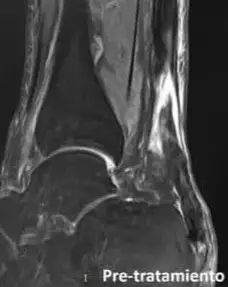
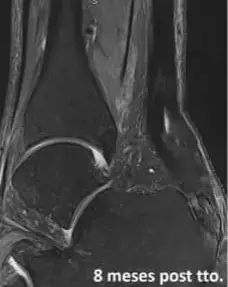
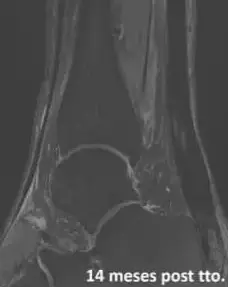
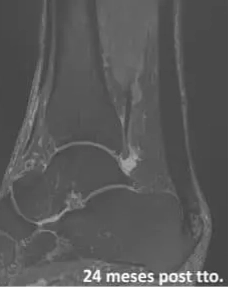
We have clinical experience with virtually every tendon in the human body, namely the patellar tendon, the Achilles tendon and the Harmstring, to mention just a few. MRI from a 86 years-old patient is included below. He presented a frayed Achilles tendon, with a 3 cms break. The evolution of the injury after treatment him with cultured stem cells can be observed. 8 months later, the injury was virtually healed and 24 months later, the tendon wasbrand new and completely unlike the previously frayed tendon.
Dr. Sabater Tobella (86 YO) came with a serious rupture in the Achilles tendon, tissue was not only broken, but completely frayed, with a 3 cm “hole” and having pain since a long time ago.
After implanting him with 40 Million Cultured Stem Cells, he regenerated completely his tendon, having brand new tissue and recovering his quality of life, until the point he was even able to return to play tennis.
Second chance in a professional sports career
Carla López was a professional basketball player until she got an injury on the patellar tendon from her left knee.
After 4 years of pain, she decided to get implanted with Cultured Stem Cells. In a couple of months, his tendon was regenerated and she came back to sports life.
Nowadays, she lives a regular life, but she has changed the practice of basketball for weightlifting.
The American Journal of Sports Medicine acknowledges our scientific evidence
ITRT has published the results of a randomized, double-blind clinical trial in chronic patellar tendinopathy, with 20 patients. At six months, the CMC group showed a significantly greater improvement in tendon structure on ultrasound and MRI than the control group; pain and function improved in both groups, with no difference between them (Rodas et al., Am J Sports Med, 2021, PMID 33783227). The improvement was maintained at 12 months (Soler et al., Orthop J Sports Med, 2023, PMID 37711505).
1st patient worldwide in regenerating tendon: "I had a hole in the patellar tendon"
Enric’s knee, suddenly started to hurt, so he did some tests and realized that he had an injury (a “hole” as he says) in the patellar tendon, probably caused by practicing tennis and ski.
Enric was the first patient in being implanted with Cultured Stem Cells to regenerate the patellar tendon. The pain disappeared immediately and his tendon started regenerating until the injury was restored.
5 years later, he keeps enjoying skiing and his life, as if he had never had an injury. “This is the future of all injuries” he says.