We regenerate bone fractures that fail to join, with unprecedented results
0
Doses administered in non-union
0
Clinical trials in non-union
Pseudarthrosis (Non-Union fractures)
What is
Non-Union (Pseudarthrosis)?
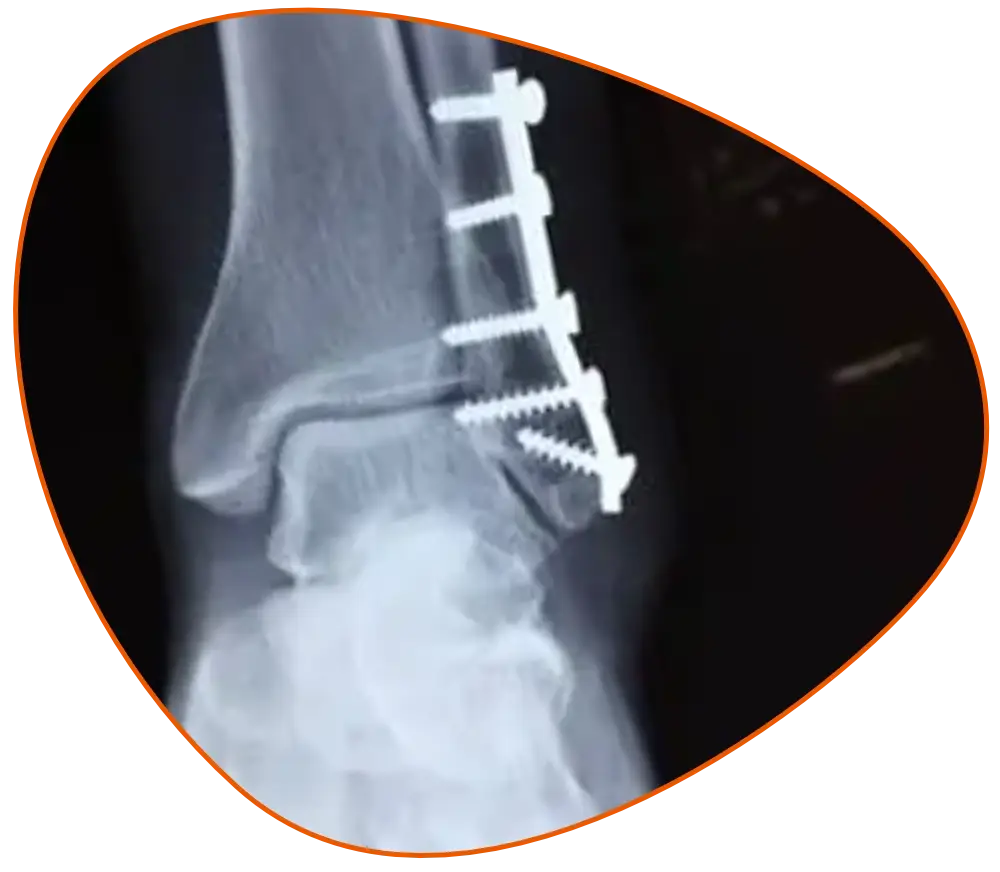
Fractures that lack the potential to heal without further intervention are defined as non-unions. This disorder, also known as Pseudarthrosis, occurs when bones are not properly repaired after a bone fracture or trauma. The lesion is usually detected when the patient does not regain normal mobility after surgery, once the estimated healing time has elapsed.
Despite its name, pseudarthrosis is unconnected with osteoarthritis. They are different diseases. One affects the cartilage and other the bone.
At ITRT, we have proven that treating non-unions with Cultured Mesenchymal Stem Cells (CMSC) new bone is created and the injury healed.
"World Champion Dani Pedrosa healing collar bone fracture with Cultured Stem Cells"
Three times World Champion Dani Pedrosa, suffered a tough crash at Motegi in the Japanese GP training, which caused him to break his collarbone in 3 pieces. After implanting a plate, the bone failed to join and, years later, in his daily life, it broke again.
After being implanted with 40 Million of Cultured Stem Cells, he completely restored the injury and was able to compete again at a professional level and enjoy his passion.
“Nobody could give me a straight answer and the consensus was I was going to have a shorter leg”
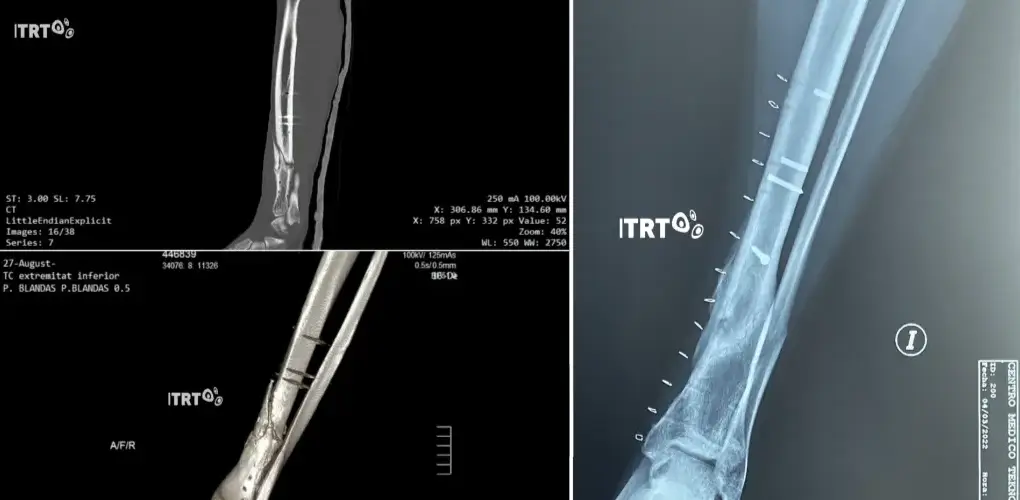
Nick Tudor broke his leg really seriously, he got a rotational fracture in several pieces, including a small one in the middle. After some treatments, the leg wasn’t healing the way it should be doing and the general consensus from the specialists was that he was going to have a shorter leg.
With a single dose of 40 Million of Cultured Stem Cells and after a period of rehab with his physiotherapist, David de Toro, he has started to run up mountains again.
Atrophic Non-Union
This refers to a bone fracture that does not heal or, in other words, the bone cannot be restored. It is usually caused by inadequate immobilization and inadequate blood supply. Its treatment has traditionally required grafts that facilitate bone repair.
However, Cultured Stem Cells have now made regeneration possible. The bone recovers the structure and endurance it had prior to the injury
Not all stem cell treatments are equal; many of them barely contain a handful of stem cells, at best..
Our exclusive therapy of cultivated stem cells is the only one in the field of Regenerative Medicine that has scientifically demonstrated its effectiveness and safety. Only ITRT applies this therapy, which is the result of over 20 years of research.
Solo ITRT aplica esta terapia que es el fruto de más de 20 años de investigación.Differences of our exclusive therapy from the rest of the mislabeled ‘stem cell’ treatment:
Dosage
We have scientifically demonstrated in clinical trial that only by using millions of units can the regeneration process be activated. Our therapy applies millions of stem cells, certified by our laboratory.
Clinical trials
Over more than 20 years, we have developed or taken part in 23 trials, 14 of them authorized clinical trials in patients.
Tipology
There are many types of stem cells, but we have demonstrated that only 3 of them are effective when applied to tissues. In the laboratory, we select the correct types of stem cells to ensure regeneration.
Cellular culturing
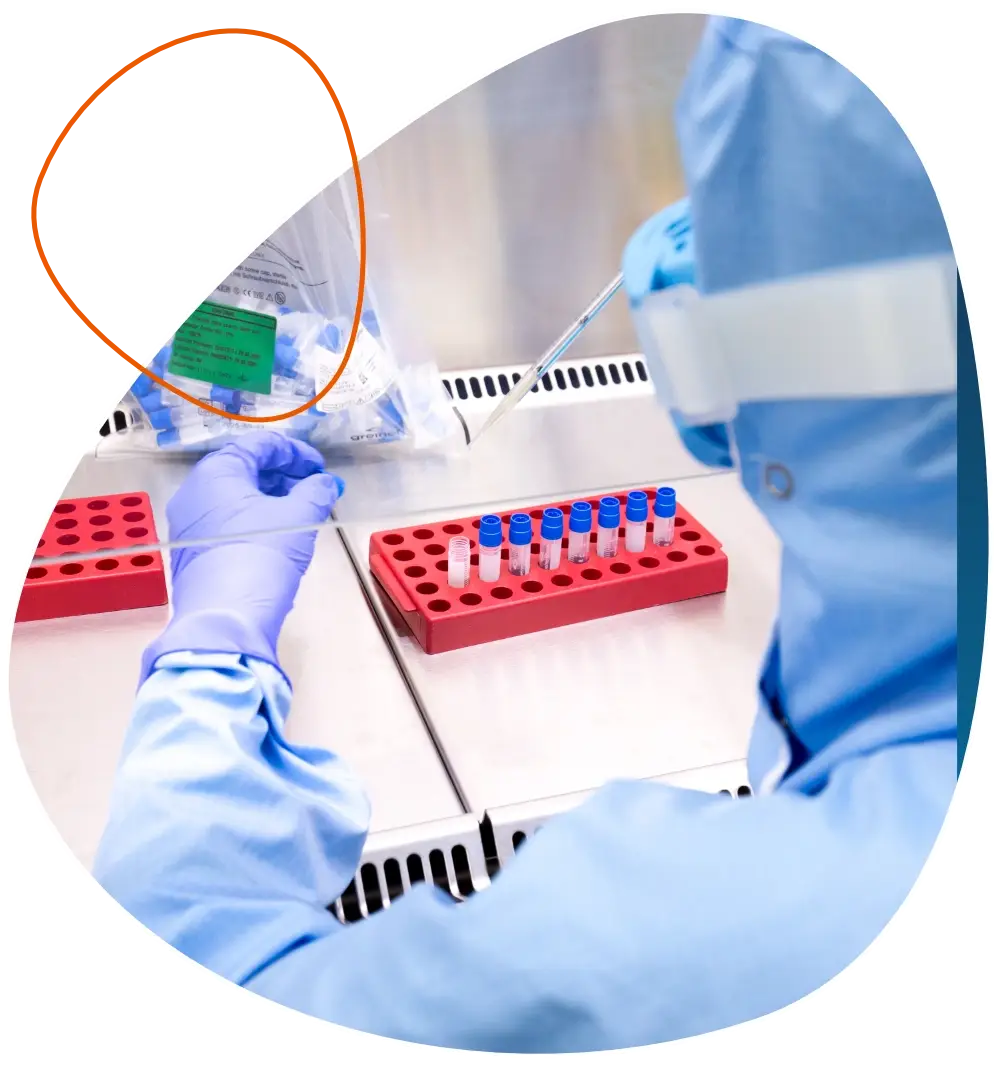
Once the appropriate stem cells are selected, the very small quantity obtained through isolation undergoes an activation and culturing process, causing them to begin multiplying until reaching millions of units.
Cells from donors
We have shown in a clinical trial that we can use cells from other donors. This is very important for elderly patients, those with urgent needs or serious illnesses.
Process of extraction and cultivation of
MESENCHYMAL
STEM CELLS
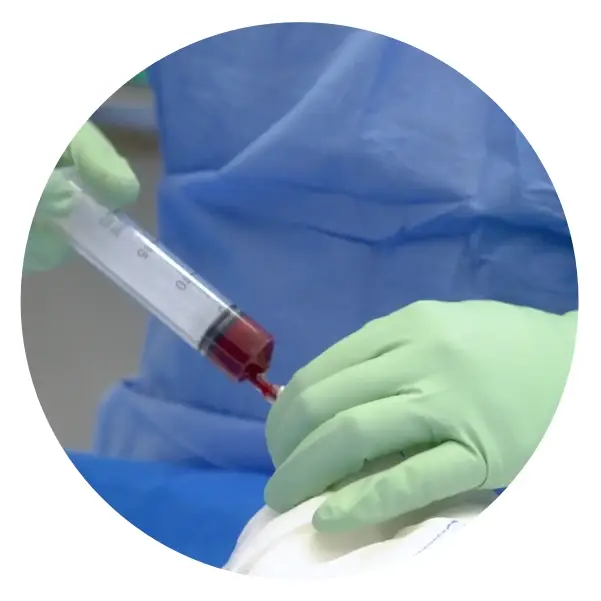
1.EXTRACTION
A small puncture is performed in the iliac crest of the hip to extract mesenchymal stem cells from the bone marrow.
The process is brief, painless, and does not require hospital admission. The cells are sent to the laboratory to be selected and cultured.
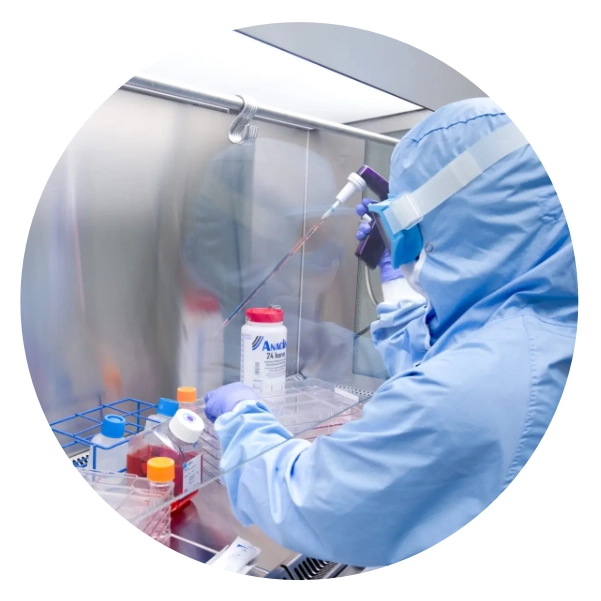
2. CULTIVATION
The few units of Mesenchymal Stem Cells that are isolated are cultured to multiply them into millions of units. This process can take several weeks.
A vial with millions of Cultured Mesenchymal Stem cells (CMSCs) is prepared.
The rest are frozen to preserve them for future needs.
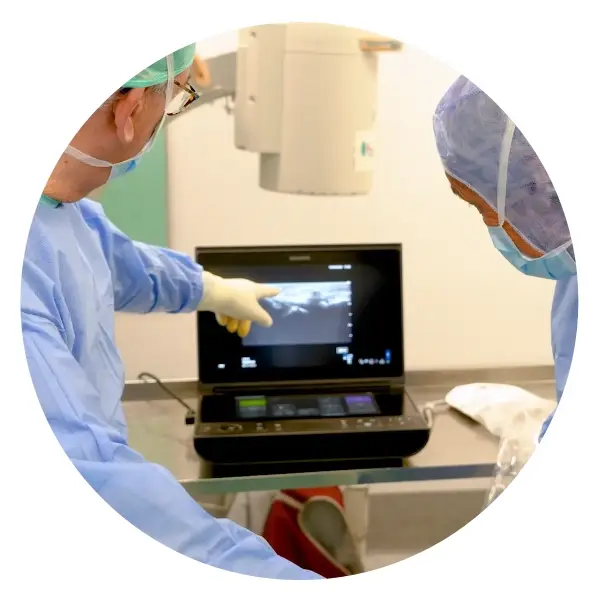
3. IMPLANTATION
The CMSCs are implanted into the patient’s joint or tendon where the lesion is located.
The treatments have shown unprecedented results in tissue and tendon regeneration.