The Achilles tendon is the strongest tendinous structure in the musculoskeletal system and plays a critical role in transmitting load from the triceps surae muscle to the calcaneus. Its integrity is essential for walking, running, and athletic performance.
Despite its strength, the Achilles tendon is especially vulnerable to mechanical overuse, tissue aging, and repeated microtrauma—factors that alter its collagen structure and increase the risk of degenerative injuries.
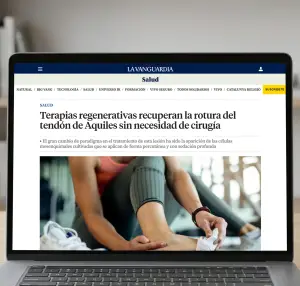
Chronic Achilles tendinopathies often respond poorly to conventional treatments such as physical therapy, anti-inflammatory medication, or local injections. In many cases, these interventions fail to reverse structural damage or restore biomechanical function. In light of these limitations, biologically based therapies—such as the advanced therapy medicinal product developed by ITRT from cultured mesenchymal cells (CMC)—are emerging as a scientifically grounded alternative.
See also: Mesenchymal Cells in Tissue Regeneration: A Revolutionary Advancement in Regenerative Medicine
Main Achilles Tendon Injuries
1. Non-Insertional Tendinopathy (Tendinosis)
Non-insertional Achilles tendinopathy, also known as tendinosis, involves progressive collagen degeneration in the mid-portion of the tendon without acute inflammation.
Histologically, it is characterized by collagen fiber disorganization, loss of structural alignment, and pathological neovascularization, which compromise mechanical strength and increase the risk of partial or full rupture. It is commonly associated with chronic overuse and limited tissue repair capacity.
2. Insertional Tendinopathy
Insertional Achilles tendinopathy affects the enthesis, where the tendon inserts into the calcaneus. It is often associated with dystrophic calcifications, retrocalcaneal bursitis, and fibrosis of the surrounding tissue, causing local pain, morning stiffness, and progressive loss of function.
The structural damage and altered tissue environment limit the effectiveness of conventional treatments, particularly in advanced stages.
3. Partial Tears
Partial Achilles tendon tears typically appear as longitudinal fissures within the tendon, causing a partial loss of the triceps surae’s contractile function.
Diagnosis may be challenging in early stages due to nonspecific symptoms and the absence of full rupture. Without proper treatment, the condition may evolve into a complete rupture or refractory chronic tendinopathy.
4. Full Rupture
A complete Achilles tendon rupture involves full discontinuity of tendon fibers, leading to a sudden loss of function in the affected leg. Surgical repair is usually necessary, especially in active individuals or athletes.
Postoperative recovery is lengthy and carries risks such as rerupture, adhesions, or residual functional deficits—factors that may hinder full recovery unless combined with rigorous rehabilitation and, in some cases, regenerative therapies.
5. Compression Syndrome
Achilles tendon compression syndrome results from chronic external pressure on the tendon, often caused by bony prominences (e.g., calcaneal exostosis) or improper footwear. This repetitive compression leads to mechanical inflammation, peritendinous irritation, and tissue degeneration, particularly at the insertion site. Treatment should address the source of compression and repair any tendon damage.
See also: How to Regenerate the Patellar Tendon with Cultured Mesenchymal Cells?
Advanced Diagnostic Tools
Accurate diagnosis of Achilles tendon injuries requires high-resolution ultrasound and MRI to assess the morphology, location, and extent of structural damage.
At specialized centers like ITRT, these tools are used alongside clinical follow-up for comprehensive tendon assessment. Additionally, specific biomarkers for tendon degeneration are under development and may allow earlier, more personalized diagnosis in the future.
Medical Approach to Achilles Tendon Injuries
Treatment plans must be tailored to the nature and severity of each injury. Conventional therapies such as targeted physiotherapy, extracorporeal shockwave therapy, corticosteroid injections, or platelet-rich plasma (PRP) have specific indications but also limitations, especially in chronic cases.
In degenerative conditions, the adult tendon has a very limited self-repair capacity, reducing the efficacy of traditional interventions and making biologic therapies with greater regenerative potential necessary.
Clinical Use of Cultured Mesenchymal Cells (CMC)
The use of cultured mesenchymal cells (CMC) in Achilles tendon injuries represents an advanced biological therapy with scientific and regulatory backing. This strategy aims not just to relieve symptoms but to restore tendon structure and function through biological regeneration. Key aspects include:
Therapeutic Rationale
CMC target type I collagen matrix, essential to tendon architecture. They promote revascularization, modulate chronic inflammation, and stimulate tissue regeneration.
Clinical Indications Recommended in cases of:
- Refractory chronic tendinopathies
- Partial tears without surgical indication
- Patients seeking to avoid or delay surgery
Scientific and Regulatory Evidence
Efficacy has been demonstrated in clinical trials approved by AEMPS, showing objective improvements in imaging and function.
The therapy is authorized for use in hospital settings under regulated conditions and always includes structured clinical follow-up.
See also: What Causes Lumbar Disc Disease and How Can It Be Treated?
When to Consider a Regenerative Approach for Achilles Injuries
Choosing the right treatment for Achilles tendon injuries requires expert evaluation based on the injury’s location, structural severity, and clinical progression. In complex or treatment-resistant cases, cell therapy emerges as a viable regenerative—rather than merely palliative—option.
Access to personalized evaluation and CMC therapy requires referral to specialized regenerative medicine centers with clinical experience and official authorization to apply advanced therapies.
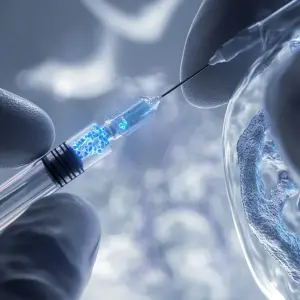
At ITRT, we have developed an AEMPS-approved advanced therapy medicinal product derived from the patient’s own cultured mesenchymal cells. This product:
- Is manufactured under GMP conditions in a clean-room environment
- Contains a personalized cell dose with characterized, viable cells
- Meets all regulatory criteria as an officially authorized therapy
We assess each case individually and provide guidance on the most suitable therapeutic options based on diagnosis.