Regenerating the supraspinatus tendon is crucial to maintaining mobility and preserving quality of life. Located in the shoulder, this tendon plays an essential role in stabilizing the joint and enabling various arm movements. Due to its anatomical location, supraspinatus tendon injuries are common and often lead to chronic pain and functional limitations.
Understanding how to regenerate the supraspinatus tendon has become a priority for both patients and healthcare professionals. Today, advanced therapeutic options aim to activate the body’s natural tissue repair mechanisms. These include non-invasive approaches such as specialized physiotherapy, tailored exercise programs, and—in selected cases—advanced therapy medicinal products. These strategies help restore shoulder function and reduce the pain associated with tendinopathy or tendon tears, allowing for a more effective and lasting recovery.
What Is the Supraspinatus Tendon and What Does It Do?
The supraspinatus tendon is part of the rotator cuff, a key structure in the shoulder that allows arm movement in multiple directions and provides joint stability. It connects the supraspinatus muscle (located in the scapula) to the head of the humerus and enables daily actions such as lifting the arm or playing sports.
Because of its critical function and position, this tendon is particularly susceptible to injury—especially after repetitive motions or intense physical activity. Such injuries can result in pain and reduced mobility.
See also: Mesenchymal Cells in Tissue Regeneration: A Revolutionary Advancement in Regenerative Medicine
Symptoms of a Supraspinatus Tendon Injury
- Shoulder pain that worsens when lifting the arm overhead
- Pain radiating from the shoulder down the arm
- Weakness in the affected shoulder, making everyday tasks like dressing or grooming difficult
- Loss of strength during specific movements such as abduction or external rotation
- Stiffness and reduced range of motion, especially after resting
- Clicking or popping sounds during shoulder movement
- Inability to fully raise the arm without pain
- Compensatory trunk movements due to shoulder discomfort
Scientific Perspective on Supraspinatus Tendon Regeneration
Regenerating the supraspinatus tendon is an active and highly relevant area of research in sports and orthopedic medicine. At the Institute of Tissue Regenerative Therapy (ITRT), we focus on understanding the cellular and molecular mechanisms involved in tendon healing.
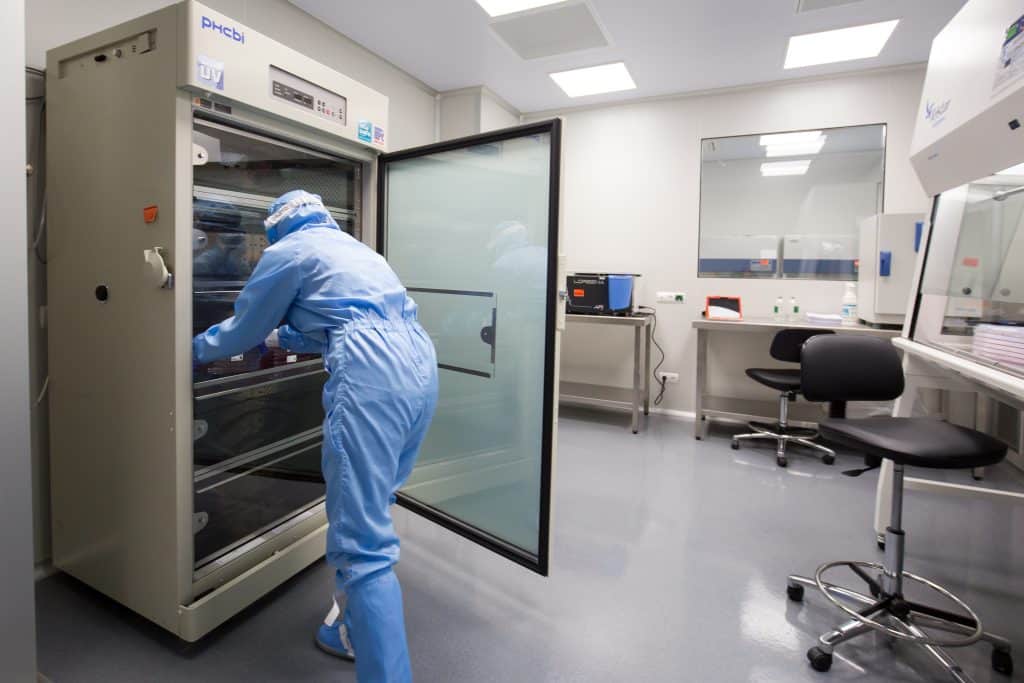
Unlike other tissues, tendons have a limited capacity for self-repair. This is due to their low vascularization and sparse cellularity, which hinder spontaneous healing after injury. To overcome this, ITRT applies therapies based on cultured mesenchymal cells (CMC) to stimulate biological regeneration of the tendon, reduce pain, and restore shoulder function long-term.

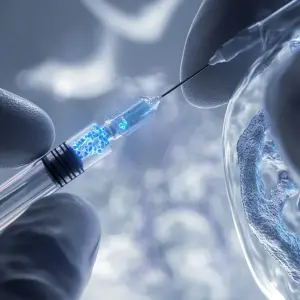
One of the most promising approaches to supraspinatus tendon regeneration is the advanced therapy medicinal product developed by ITRT, based on the application of cultured mesenchymal cells (CMC). These cells are capable of regenerating various tissue types, including tendons.
ITRT’s clinical trials have shown that injecting CMCs into the injury site can promote new tendon tissue formation and improve the quality of the regenerated tendon. Moreover, cultured mesenchymal cells secrete growth factors and other bioactive molecules that enhance healing and reduce inflammation.
Notably, growth factors such as platelet-derived growth factor (PDGF) and transforming growth factor beta (TGF-β) can stimulate the proliferation and differentiation of tendon cells. Biomaterials like collagen scaffolds or synthetic polymers provide structural support for the new tissue and help integrate it with the existing tendon.
At ITRT, we have successfully treated over 90 cases of supraspinatus tendon injuries using advanced therapies with cultured mesenchymal cells and through clinical trials on tendon tears, all demonstrating significant improvements in inflammation, pain, and tissue regeneration.
Key Factors for Successful Regeneration
The success of supraspinatus tendon regeneration depends largely on the severity and duration of the injury. Recent injuries have a better prognosis than chronic cases with advanced tissue degeneration. Therefore, early diagnosis and timely intervention are crucial.
The type of treatment is also critical. Combining conservative therapies such as physiotherapy with biological treatments like cultured mesenchymal cells applied by ITRT increases the likelihood of success.
Patient commitment is another essential factor. Following medical instructions, attending physiotherapy sessions regularly, and doing home exercises significantly speed up recovery. Additionally, adopting healthy habits and a balanced diet further supports the regenerative process when undergoing cell therapy.
Future Outlook for Tendon Regeneration
The field of supraspinatus tendon regeneration continues to evolve, offering new solutions for patients with injuries in this critical part of the shoulder. While tendons naturally have limited regenerative ability, modern treatments such as cultured mesenchymal cells are producing encouraging outcomes.

At ITRT, we see a promising future for supraspinatus tendon regeneration. Regenerative medicine research and advanced clinical trials have yielded hopeful results in complex tendon injuries.
Our advanced therapy medicinal product, developed from cultured mesenchymal cells (CMC), not only supports structural regeneration but also significantly reduces inflammation and pain. These clinical effects enable faster, safer recovery—even in patients with high physical demands, such as athletes.
Through this approach, we are redefining rotator cuff injury management with more effective, personalized, and scientifically grounded therapies.
While fully regenerating the supraspinatus tendon remains a challenge, scientific advances are greatly improving the chances of recovery. A comprehensive approach—precise diagnosis, patient-specific treatments, and active rehabilitation—is key to achieving this goal.
If a supraspinatus tendon injury is limiting your quality of life, consult with ITRT. You will receive a free assessment and may begin treatment with cultured mesenchymal cells tailored to your condition.