

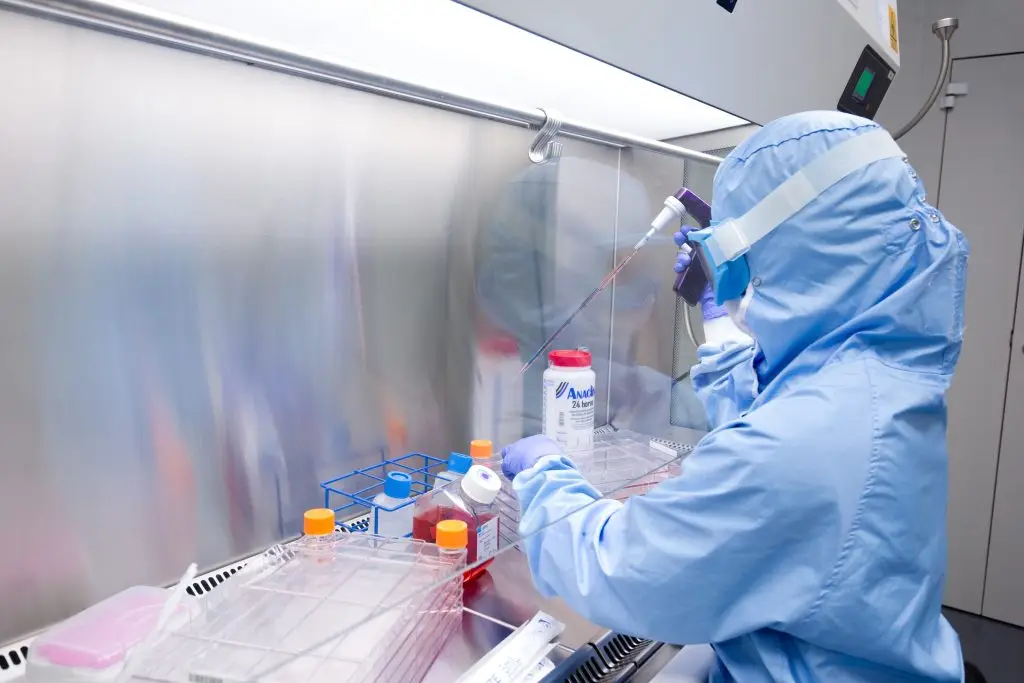
In the field of musculoskeletal biological interventions, it is common to encounter procedures that use concentrated bone marrow aspirates applied on the same day alongside developments based on cultured mesenchymal cells (CMC). Although both approaches share a common biological origin —bone marrow or adipose tissue— their scientific and regulatory nature is substantially different.
Same-day cell concentrates correspond to minimally manipulated products, whereas cultured mesenchymal cells constitute the active substance of an advanced therapy medicinal product, manufactured in a GMP cleanroom, with defined dosing, cellular characterization, and oversight by the Spanish Agency of Medicines and Medical Devices (AEMPS). The difference does not lie solely in the tissue of origin, but in the ex vivo expansion process and its legal status as a medicinal product.
Understanding this distinction is not a matter of terminology, but of science and regulation. It involves differentiating between a biological procedure and a medicinal product developed under European pharmaceutical standards, with direct implications for traceability, clinical evidence, and regulatory responsibility.
See also: Which cell-based treatments can be considered legal and regenerative?
What makes cultured mesenchymal cells an advanced therapy medicinal product?
Cultured mesenchymal cells (CMC) are classified as an advanced therapy medicinal product when, after procurement, they undergo substantial manipulation through ex vivo expansion under controlled conditions. This process allows selective expansion of the mesenchymal population, definition of a precise cell dose, and standardization of the product under pharmaceutical criteria.
Manufacturing in a GMP cleanroom, phenotypic characterization, quality controls, and regulatory supervision transform the initial biological material into an advanced therapy medicinal product. It is not merely the administration of cells, but the development of a cell-based product with pharmacological identity, traceability, and a specific legal framework.
This combination of substantial manipulation, industrial control, and health regulation is what distinguishes cultured mesenchymal cells from other biological procedures and underpins their classification as an advanced therapy medicinal product within the European context.
What are same-day cell concentrates?
Cell concentrates obtained and applied during the same surgical intervention are characterized by the following:
- No culture expansion
- No increase in the specific mesenchymal cell population
- They do not constitute an advanced therapy medicinal product
- No GMP manufacturing required
- No individual authorization by the AEMPS as a medicinal product
From a European regulatory perspective (Directive 2001/83/EC) and national framework, these products are not considered advanced therapy medicinal products when no substantial manipulation is involved.
Their nature differs both in legal definition and biological characterization.
Comparison: same-day concentrate vs. cultured mesenchymal cells

The key difference lies not in the cellular origin, but in the process:
| Characteristic | Same-day concentrate | Cultured mesenchymal cells |
| Manipulation | Non-substantial | Substantial (culture) |
| Cell dose | Undefined | Defined (20–120 million) |
| Characterization | Not standardized | Validated phenotype |
| GMP manufacturing | No | Yes |
| Regulation | Procedure | Medicinal product |
Cell expansion allows:
- Multiplication of the mesenchymal population
- Dose control
- Reproducibility assurance
- Quality and viability assessment
Without expansion, there is no defined cell-based medicinal product.
Regulatory difference: procedure vs. medicinal product
In Spain and within the European Union framework, a cell product expanded ex vivo under Good Manufacturing Practice (GMP) conditions falls into the category of an advanced therapy medicinal product. This classification does not depend on clinical intention, but on the degree of manipulation and the industrial process applied to the biological material.
Cultured mesenchymal cells (CMC), through cellular expansion and controlled characterization, acquire their own pharmacological identity. They cease to be merely processed autologous tissue and become a medicinal product subject to European pharmaceutical legislation.
1. Substantial manipulation and legal status
The regulatory turning point is substantial manipulation. Cell expansion over several weeks under controlled laboratory conditions involves:
- Quantitative increase of the mesenchymal population
- Cell selection and purification
- Definition of a therapeutic dose
- Control of sterility, viability, and stability
This process places the product within the legal framework of advanced biological medicinal products. It is not a conceptual interpretation, but a direct consequence of applicable European legislation.
2. Mandatory regulatory implications
Classification as an advanced therapy medicinal product entails structural requirements:
- Pharmaceutical dossier or IMPD (Investigational Medicinal Product Dossier)
- Authorized clinical trial when applicable
- Pharmacovigilance program
- Supervision and control by the Spanish Agency of Medicines and Medical Devices (AEMPS)
- Certificate of Pharmaceutical Product (CPP)
These elements are not optional. They constitute the framework that guarantees traceability, reproducibility, and healthcare responsibility.
3. Individual authorization and healthcare responsibility
When the application of cultured mesenchymal cells is not performed within an authorized clinical trial, its use requires individual authorization from the AEMPS, in accordance with the advanced therapy medicinal product framework.
At ITRT, each indication is evaluated under this regulatory framework, ensuring that the advanced therapy medicinal product is administered with appropriate legal and pharmaceutical oversight.
The regulatory difference between a biological procedure and a cell-based medicinal product is therefore structural. It defines the level of health control, the degree of required evidence, and the professional responsibility associated with its clinical application.
Clinical difference: structural evidence
The clinical difference between a biological procedure and an advanced therapy medicinal product with cultured mesenchymal cells (CMC) is not based solely on the administration technique, but on the scientific development model supporting it.
In the case of ITRT, the development of medicines based on cultured mesenchymal cells has followed a structured clinical program, with methodology consistent with pharmacological research.
Beyond the tissue of origin: the true differentiating factor
Not all biological interventions derived from bone marrow are equivalent.
The difference between a same-day cell concentrate and an advanced therapy medicinal product with cultured mesenchymal cells (CMC) lies in structural elements:
- Substantial manipulation
- Manufacturing under GMP regulations
- Dose definition and standardization
- Applicable pharmaceutical regulation
- The existence of structured clinical evidence
Understanding this distinction is essential to rigorously interpret the scientific, clinical, and regulatory scope of each approach. This is not a technical variation, but a difference that determines the level of healthcare control and the biomedical development model involved.
At ITRT, each case is evaluated within a strictly medical and regulatory framework. If you would like to determine whether your clinical situation may be assessed under these criteria, you may request a medical consultation for individualized evaluation.