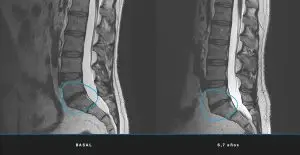


Knee osteoarthritis is one of the leading causes of chronic pain and functional limitation in the adult population. From a pathophysiological perspective, it involves progressive degradation of hyaline cartilage, alterations of the subchondral bone, low-grade synovial inflammation, and disorganization of the extracellular matrix.
In this context, addressing the question of how to regenerate cartilage in osteoarthritis requires clearly distinguishing between:
- Symptomatic or anti-inflammatory procedures.
- Substitutive surgical interventions.
- Advanced therapy medicinal products evaluated in authorized clinical trials.
The approach developed by the Institute for Tissue Regenerative Therapy (ITRT), based at Centro Médico Teknon in Barcelona, falls exclusively within this latter category.
Documented clinical case: knee osteoarthritis with cultured mesenchymal cells (CMC)
Knee osteoarthritis is not merely wear and tear. It is a progressive structural alteration of the articular cartilage with functional impact and deterioration of quality of life.
When a patient seeks information about how to regenerate cartilage or how to address knee osteoarthritis, it is essential to understand what it truly means to intervene on cartilage structure within a regulatory framework.
At ITRT, authorized clinical cases have been managed under the necessary regulatory, safety, clinical, and documentation framework required to document the effects of an advanced therapy medicinal product in these cases. The observed results correspond to individual cases and are not extrapolable to all patients.
See also: Which cell-based treatments can be considered legal and regenerative?
Clinical context
Patient with grade III knee osteoarthritis, persistent pain, functional limitation, and failure of conventional conservative treatments.
Medical approach
Assessment within the MSV-ARTRO-2009-01 clinical trial (Phase I–II), authorized by the AEMPS and approved by the CEIm. Indication for intra-articular administration of an advanced therapy medicinal product with autologous cultured mesenchymal cells (CMC).
Procedure
- Bone marrow aspiration.
- Manufacturing of the medicinal product in a GMP cleanroom.
- Cell expansion and quality control.
- Intra-articular administration with a defined cell dose.
- Clinical and MRI follow-up.
Objective evaluation
At the 12-month follow-up:
- Documented functional improvement.
- Structural changes on MRI consistent with image-demonstrated structural regeneration.
- Absence of serious adverse events related to the medicinal product.

Clinical interpretation
If asking how to address knee osteoarthritis, it is appropriate to reframe the question: is it possible to intervene on cartilage structure with clinical evidence and under regulatory control?
Clinical trials with cultured mesenchymal cells developed by ITRT show that, in selected patients, it is possible to observe image-demonstrated structural regeneration within a medical, regulated, and scientifically documented framework.
Medical process in knee osteoarthritis with cultured mesenchymal cells (CMC)
In knee osteoarthritis, discussing how to regenerate cartilage requires a strictly medical, scientific, and regulated approach. It does not involve applying an isolated procedure, but rather following a structured clinical process in accordance with medicinal product regulations.
From a regulatory and pharmacological standpoint, the approach includes:
- Rigorous medical patient selection to evaluate medical history, grade of osteoarthritis, biological age, functional status, and absence of contraindications.
- Objective confirmation of osteoarthritis grade through radiological classification (II–IV) and MRI assessment to evaluate the structural condition of the cartilage.
- Indication within an authorized clinical protocol, since the intervention must be framed within an authorized clinical trial or a program with individual authorization from the AEMPS.
- Manufacturing of the medicinal product under GMP regulations, where cultured mesenchymal cells are isolated, expanded, and characterized in an authorized cleanroom, with quality control and traceability.
- Individual authorization by the AEMPS, since every advanced therapy medicinal product requires prior regulatory validation before administration.
- Administration of a defined cell dose, as the dose is not arbitrary; it is established according to the clinical protocol and specific indication.
- Clinical and imaging follow-up, including functional assessment and MRI to document potential structural changes.
What does structural regeneration mean in knee osteoarthritis?
From a technical perspective, it involves:
- Increase or stabilization of cartilage thickness, evaluated by MRI.
- Improvement in articular cartilage signal, consistent with changes in the extracellular matrix.
- Modulation of the intra-articular inflammatory environment, impacting the tissue microenvironment.
In selected patients and under a strict regulatory framework, published clinical evidence with cultured mesenchymal cells shows that measurable structural changes may be observed.
ITRT and knee osteoarthritis: clinical development with structural evidence
The ITRT has developed advanced therapy medicinal products with cultured mesenchymal cells (CMC) for more than 20 years within a regulatory framework supervised by the AEMPS.
In the field of knee osteoarthritis, its trajectory includes:
- 13 clinical trials in humans with advanced therapy medicinal products with CMC, in addition to preclinical animal model studies and complementary research lines.
- Specific programs in osteoarthritis, disc degeneration, tendinopathies, and xerostomia.
- Objective MRI evaluation to document image-demonstrated structural regeneration.
- Manufacturing of the medicinal product in a cleanroom under GMP regulations, with quality control and traceability.
- Clinical application in a hospital setting at Centro Médico Teknon (Barcelona).
Dr. Robert Soler, Medical Director of ITRT, has led the clinical programs in knee osteoarthritis, integrating methodological design, regulatory oversight, and structural imaging follow-up.
In this context, the difference does not lie solely in using cultured mesenchymal cells, but in developing them as regulated medicinal products evaluated in clinical trials with published evidence.
See also: Truths and myths about mesenchymal cells in tendon regeneration
Clinical evidence, regulation, and individualized medical assessment
Cultured mesenchymal cells (CMC), developed as advanced therapy medicinal products and evaluated in authorized clinical trials, represent a research line supported by published clinical data and imaging follow-up.
If you are living with knee osteoarthritis and wish to know whether your case may be assessed within a program using advanced therapy medicinal products with cultured mesenchymal cells (CMC), individualized medical evaluation is a prerequisite before any indication within this regulatory framework.
Each indication requires:
- Comprehensive clinical evaluation.
- Confirmation of osteoarthritis grade.
- Imaging assessment.
- Review of regulatory criteria.
Therapeutic decisions are always based on individualized medical and regulatory criteria.