
A rotator cuff tear is one of the most common shoulder injuries, and a significant proportion of supraspinatus tendon tears do not fully respond to conservative treatment. Against this backdrop, there is growing scientific interest in the role of mesenchymal cells in tendon repair.
This article is informational in nature. Its purpose is not to offer a treatment, but to explain what the scientific evidence says about the available alternatives and what distinguishes, from a regulatory and biological standpoint, an advanced cell therapy medicine with cultured mesenchymal cells (CMC) from other cell-based procedures.
See also: What cell treatments can be considered legal and regenerative?
What is a rotator cuff tear, and why does it mainly affect the supraspinatus?
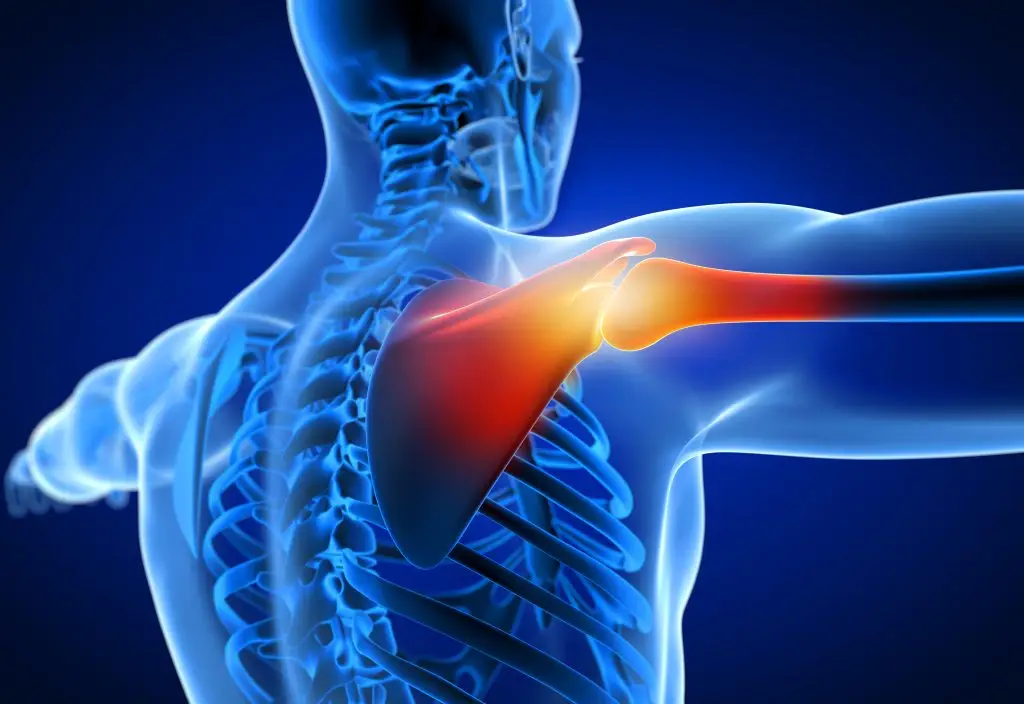
The rotator cuff is made up of four tendons (supraspinatus, infraspinatus, teres minor, and subscapularis) that stabilize the shoulder joint and allow the arm to be raised and rotated. The supraspinatus is, by far, the tendon most commonly injured, due to its path beneath the acromion and the mechanical friction it undergoes with repeated overhead arm movement.
Rotator cuff pathology is one of the leading causes of musculoskeletal pain and disability, along with low back and knee pain. Its prevalence clearly increases with age: population-based studies describe an overall prevalence of around 20%, with the supraspinatus tendon as the most frequently affected site, which rises steadily and reaches around 25% in people over 60 and up to 36.6% in people in their 80s, including both symptomatic and asymptomatic tears (population-based screening study, PubMed 24403741).
A notable finding for anyone researching pain-free shoulder issues: most rotator cuff tears are asymptomatic. According to the same population-based study, 65.3% of tears detected by ultrasound caused no pain, compared with 34.7% that were symptomatic (PubMed 24403741). This does not mean a painless tear should be ignored, but it explains why many patients discover the injury incidentally.
What does the evidence say about conservative treatment and surgery?
Physical therapy is the first line of treatment. In atraumatic full-thickness tears (often involving the supraspinatus tendon), some studies report success rates close to 85% within the first 12 weeks of treatment, with most patients avoiding surgery after a structured program. In traumatic tears, however, conservative treatment performs notably worse, and a substantial proportion of patients ultimately require surgery. The prognosis also worsens when multiple tendons are affected, there is significant muscle atrophy, or persistent impingement.
Corticosteroid injections act on inflammation and pain, but do not repair the torn tendon; their effect typically lasts between 3 weeks and 3 months and tends to diminish afterward (Buchbinder et al., Cochrane Database Syst Rev 2003; PMID 12535501).
Arthroscopic repair is the standard surgical option, with good functional outcomes in many cases, but with known limitations: systematic reviews describe an average retear rate (mostly involving the supraspinatus) of around 20% after repair, with very wide variability depending on tear size and surgical technique, which reaches 37% in large or massive tears (systematic review and meta-analysis, PMC8408924). This variability explains why managing large tears with advanced tendon retraction remains a clinical challenge.
Mesenchymal cells in the rotator cuff: what the research shows
The scientific evidence on the use of mesenchymal cells in rotator cuff pathology (particularly in supraspinatus tendon tears) is still a field under development. Some systematic reviews describe a protective effect on the structural integrity of the repair over the medium and long term when used as an augmentation to surgery, while other studies find no relevant functional differences compared with repair alone. It is, therefore, an open line of research, whose results should be interpreted with caution and within the context of the available evidence.
What distinguishes an advanced cell therapy medicine (CMC)?
Not all biological interventions involving cells are equivalent. The main difference lies not in the tissue of origin, but in the degree of manipulation and the regulatory framework.
Cell concentrates obtained and administered on the same day are minimally manipulated products: they do not undergo culture expansion, do not selectively increase the mesenchymal cell population, are not manufactured under GMP regulations, and are not characterized.
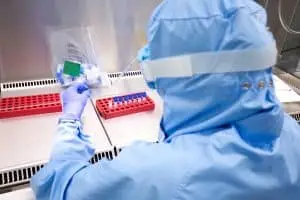
Cultured mesenchymal cells (CMC) are the active substance of an advanced cell therapy medicine. They undergo substantial manipulation through ex vivo expansion in a cleanroom under GMP regulations, which makes it possible to define a precise cell dose and characterize the product, control its quality and viability, and guarantee the traceability of each batch. It is this combination of substantial manipulation, pharmaceutical control, and regulatory oversight that gives CMC its own distinct pharmacological identity and classifies it as a medicine under the European framework.
Understanding this distinction is a scientific and regulatory matter, not a terminological one: it defines the level of health oversight, the degree of evidence required, and the accountability associated with each approach.
ITRT’s research program in tendon regeneration
ITRT has been developing advanced cell therapy medicines with CMC for more than twenty years, with its own laboratory under GMP regulations and fifteen clinical trials authorized by the AEMPS across various musculoskeletal indications.
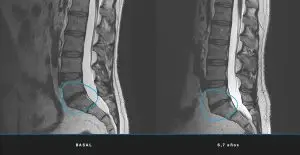
In the field of tendons, ITRT completed a clinical trial in patellar tendinopathy with structural regeneration documented by MRI and published in the international scientific literature. This ability to document structural changes through imaging, beyond pain evolution, is a distinctive feature of the institute’s research program.
See also: Clinical advances in patellar tendinopathy with advanced CMC therapy · ITRT presents evidence of tendon regeneration
What does AEMPS individual authorization mean?
When an advanced cell therapy medicine with CMC is used outside a clinical trial, its use requires individual authorization from the Spanish Agency of Medicines and Medical Devices (AEMPS), granted on a case-by-case and batch-by-batch basis. The medical team submits the indication to the health authority, which evaluates the case and the manufacturing conditions. Only if the AEMPS expressly authorizes it can the procedure move forward. This regulatory safeguard is one of the structural differences compared with unregulated procedures.
See also: ITRT clinical trials
Frequently Asked Questions
Is an advanced cell therapy medicine the same as a “stem cell” injection?
No. The term “stem cells” is imprecise and does not correspond to the actual regulatory category of these products. Advanced cell therapy medicines with cultured mesenchymal cells (CMC) are manufactured in a cleanroom under GMP regulations and are subject to a medical prescription and to individual AEMPS authorization.
Is it the same as a same-day cell concentrate?
No. A same-day concentrate is a procedure without cell expansion or characterization, which is not manufactured under GMP regulations and does not require authorization as a medicine. An advanced cell therapy medicine with CMC meets all of these requirements.
What scientific evidence supports the use of mesenchymal cells in the rotator cuff?
The scientific literature on mesenchymal cells in the rotator cuff (including supraspinatus tendon tears) is still a field under development. Some systematic reviews describe a protective effect on the structural integrity of the repair over the medium and long term, while other studies find no relevant functional differences compared with surgery alone. For this reason, the results should be interpreted with caution and within the applicable regulatory framework.
What differentiates a regulated medicine from an unregulated procedure?
The degree of cell manipulation, manufacturing under GMP regulations, characterization and quality control, dose definition, traceability, and AEMPS authorization. These are structural elements that define the level of health oversight and the scientific development model of each approach.
Legal Notice
Advanced cell therapy medicines with cultured mesenchymal cells (CMC) require a medical prescription and individual authorization from the AEMPS. This content is informational and does not replace medical advice. Clinical outcomes depend on multiple factors and are not extrapolatable between patients.